

From mountain strongholds to timber-framed town houses, Conwy County is filled with places that bring the Middle Ages to life. These five historic gems reveal stories of Welsh princes, powerful families, merchants and monarchs, all set against the backdrop of North Wales’ timeless scenery.
Whether you enjoy dramatic architecture, peaceful walks or stories rooted in Welsh history, each stop offers a different way to explore the county’s medieval past.
1. Gwydir Castle, Llanrwst
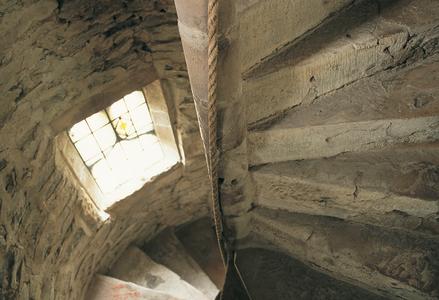 Set near Llanrwst in the Conwy Valley, Gwydir Castle is an atmospheric Welsh house with roots stretching back to the medieval period. Its earliest surviving range was built by the Coetmor family, while the house was rebuilt around 1490 by Maredudd ap Ieuan ap Robert, founder of the influential Wynn dynasty.
Later Tudor additions incorporated stone from nearby Maenan Abbey, and the house developed into one of Wales’ finest Tudor homes. Visitors can explore richly layered interiors and Grade I listed gardens, where old yews, Renaissance features and roaming peacocks add to the sense of place. The ongoing restoration is a remarkable story in its own right, including the return of historic panelling from New York after decades overseas. Nearby, the family's prayer house - Gwydir Uchaf Chapel - is a hidden gem in the Conwy Valley.
2. Llangelynin Old Church, near Henryd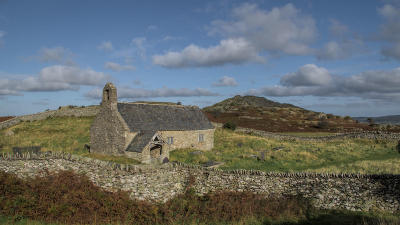
High above the Conwy Valley in the foothills of the Carneddau, Llangelynin Old Church rewards the curious visitor with tranquillity, wide views and centuries of history. The nave is believed to date from the 12th or 13th century, with later features including a medieval rood screen and a 16th-century roof.
Inside, look for the striking skull-and-crossbones wall painting and historic religious texts. Outside, the churchyard contains a holy well dedicated to St Celynnin, and is traditionally associated with healing. The church remains a place of worship, pilgrimage and quiet reflection, and the walk to it is part of the experience. Wear suitable footwear and allow time to enjoy the surrounding landscape.
(Image courtesy of Mike Hardisty, 2016, via Flickr)
3. Dolwyddelan Castle
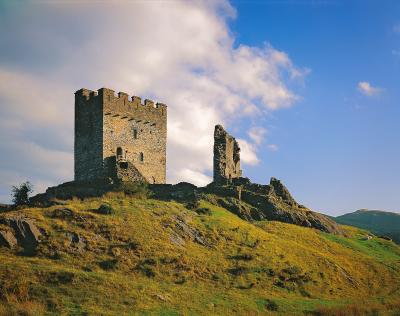 Standing on a rocky ridge above the Lledr Valley, Dolwyddelan Castle is one of the few surviving stone castles built by a native Welsh prince. Llywelyn ap Iorwerth, known as Llywelyn the Great, began the fortress after 1210 to guard an important route through the mountains and demonstrate his authority over the landscape.
Edward I captured Dolwyddelan in 1283, raised the keep and added another tower. A 19th-century restoration later gave the keep its distinctive battlements, and the join between the medieval stonework and Victorian additions can still be seen. The approach is on foot and the setting is exposed, but the views across Eryri make the climb worthwhile.
4. Aberconwy House, Conwy
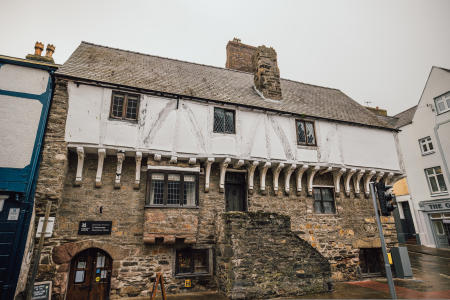 On Castle Street in the heart of Conwy, Aberconwy House is the town’s only surviving medieval merchant’s house. Timbers dated to 1417–20 make it the oldest securely dated townhouse in Wales. Its stone lower floors and jettied timber upper storey offer a glimpse of how prosperous traders lived and worked inside the medieval walls.
Over the centuries, the building has been used by produce and mineral traders, as a temperance hotel and as an antiques shop. It was saved from being dismantled and shipped to the United States before passing to the National Trust in 1934. Today, the ground floor is home to a second-hand bookshop, making this a lovely heritage stop while exploring Conwy’s historic streets.
5. Conwy Castle and town walls
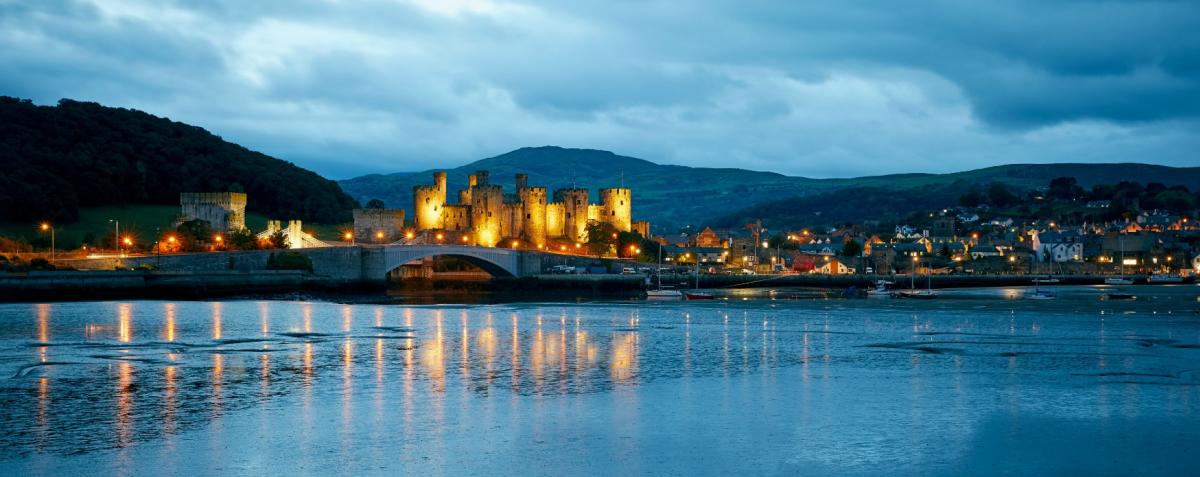
Built for Edward I by Master James of St George between 1283 and 1287, Conwy Castle remains one of Europe’s most impressive medieval fortresses. Eight towers rise above the estuary, while the exceptionally well-preserved interior contains the most complete set of medieval royal apartments in Wales.
Climb the restored spiral staircases to follow the battlements and take in views of the harbour, historic streets and mountains of Eryri. The castle forms part of a UNESCO World Heritage Site alongside Edward I’s other great fortresses at Beaumaris, Caernarfon and Harlech.
Continue your medieval journey along Conwy’s 1.3-kilometre circuit of town walls. Access is free, although temporary closures can affect individual sections, so check the latest information before your visit. The routes around both the castle and walls include steep, narrow staircases and uneven surfaces.
Plan your medieval adventure
These five places can be enjoyed individually or combined into a heritage-themed break across Conwy County. Opening times and access arrangements can change seasonally, so check with each venue before setting out. Allow extra time for rural roads, walking routes and those unforgettable views.
Ready to uncover more stories? Explore more castles, historic houses, churches and heritage attractions across Conwy County as you plan your visit.
